The Dolphins Are 0-4, and That’s Not the Whole Story
The Dolphins are 0-4, but the record hides a rookie class that's already producing. With the cap pain front-loaded into 2026, Miami's rebuild may be further along than it looks
The Miami Dolphins are 0-4, and nobody in the building is pretending otherwise. Losses at Las Vegas (27-13), at San Francisco (35-13), against Kansas City (24-10) and at Minnesota (15-10) have dropped Miami to the bottom of the AFC East. NFL Research notes that only one team since 1990 has reached the playoffs after an 0-4 start, so this season was never going to be judged by the standings anyway.
So judge it on direction instead, and the direction is better than the record suggests. The margin of defeat shrank from 22 points in San Francisco to five in Minnesota. A defense that had zero sacks through three weeks posted four in Week 4. And the youngest roster in football is already producing building blocks: a franchise-record tackler, a top-12 pick who is grading like a veteran in pass protection, and a slot corner who keeps showing up near the top of the team’s coverage charts.
Yes, this is a teardown year. But four weeks in, it looks like the people doing the tearing down know what they want to build.
A regime built for the long game
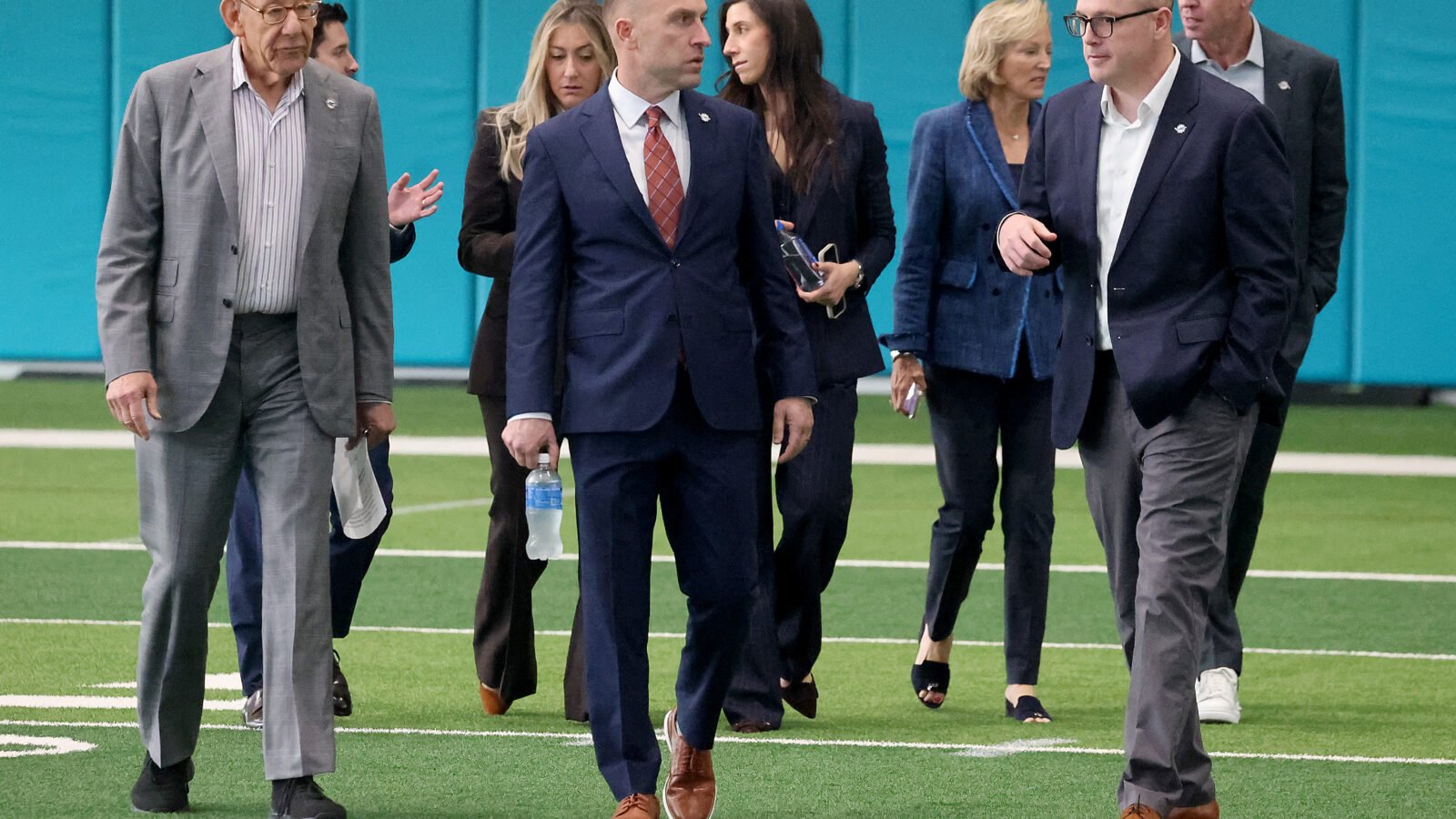
General manager Jon-Eric Sullivan and head coach Jeff Hafley arrived from Green Bay in January with a mandate to reset the franchise. After the firings of Chris Grier and Mike McDaniel, the duo inherited a roster losing Tua Tagovailoa, Tyreek Hill and Jaylen Waddle, and they brought in former Packers backup Malik Willis to start under center.
The coaching hires line up with that. Bobby Slowik was promoted to offensive coordinator, with Sean Duggan running the defense and Chris Tabor on special teams. Slowik ran Houston’s offense during C.J. Stroud’s rookie breakout, when the Texans ranked 12th in both scoring and yardage. That’s a decent track record to bring into a room full of young skill players.
And they meant it about going young. Miami opened the year with the NFL’s youngest roster, averaging 25.3 years, and roughly 47% of the active roster aged 22 to 24. Hafley has said that building “something real powerful moving forward” matters more than the early record. He also restructured practice around more 11-on-11 work than 7-on-7, a choice that makes sense when rookies need live reps.
Around the league, people seem to understand what’s going on. The Athletic left Hafley off its early hot-seat list, citing low expectations for a rebuild.
Four losses, one direction
Miami has lost all four, but the games have mostly gotten closer, and the opening schedule did them no favors.
| Week | Opponent | Result | Margin | What stood out |
|---|---|---|---|---|
| 4 | at Minnesota | L 15-10 | -5 | Defense allowed zero touchdowns; Ollie Gordon II ran for 100 yards |
| 3 | vs Kansas City | L 24-10 | -14 | De’Von Achane lost to a season-ending ACL tear on the opening drive |
| 2 | at San Francisco | L 35-13 | -22 | Low point of the season |
| 1 | at Las Vegas | L 27-13 | -14 | Rookie Caleb Douglas posted 94 receiving yards in his debut |
Results and leaders via ESPN.
It’s also worth remembering who they played. Three of Miami’s four opponents rank first, third and seventh in scoring defense, per A to Z Sports. The Dolphins also lost Achane, a 2025 Pro Bowler who led the NFL at 5.7 yards per carry, in Week 3.
The offense has also left points on the field through fixable mistakes. Against Kansas City, an illegal shift wiped out a red-zone touchdown to Malik Washington. In Minnesota, a 68-yard touchdown from Malik Willis to rookie Chris Bell was erased by an illegal-touching call. That’s potentially 14 points in two weeks, and it would have turned the Vikings game into a Dolphins lead. Penalties like that are maddening, but they’re the kind of thing a young team cleans up with reps.
The defense deserves real credit for Minnesota. The Dolphins had zero sacks through three weeks, then sacked Kyler Murray four times while holding an unbeaten Vikings team to five field goals. For the first time this year, it looked like the defense Hafley wants.
What the advanced numbers say
The efficiency numbers aren’t pretty, but the defense is closer to the middle of the pack than its EPA ranking suggests.
| Metric | Dolphins | Context | Source |
|---|---|---|---|
| Offensive EPA/play | 29th | Bottom tier, without Achane since Week 3 | SI |
| Defensive EPA/play | 28th | Dragged down by the 35-point game in Santa Clara | SI |
| Yards allowed per game | 335.5 (17th) | Ahead of Buffalo, Cincinnati and Detroit | FootballDB |
| Points allowed per game | 25.2 | Down from 28.7 after Week 3 | FootballDB, Athlon |
| Sacks | 4 (all in Week 4) | Zero through three games | ClutchPoints |
The offensive number is the concern, and most of it traces to the quarterback spot. Malik Willis has two total touchdowns, four turnovers and a 56.3% completion rate, and PFF graded him 49.2 in Week 4. He’s still learning a new offense alongside a very young supporting cast, and there’s been no indication the staff plans a change. The more encouraging news is around him.
PFF’s Week 4 grades, via Dolphins Wire, had some bright spots:
- Chop Robinson posted an 83.2 pass-rush grade, the best on the team, and logged a sack.
- Josh Uche led the defense at 79.2 overall, with a sack of his own.
- Malik Washington (79.7) and Ollie Gordon II (76.7) were Miami’s two best offensive players. Gordon’s 100 rushing yards included a 53-yard burst that helped Miami finally cross midfield.
- Both rookie left guard Kadyn Proctor and second-year right guard Jonah Savaiinaea graded 77.5 in pass protection. That’s two young guards Miami can build around.
The secondary has had its moments too. In Week 1, safety Dante Trader Jr. earned a 92.3 coverage grade, and Jordyn Brooks added an 87.2.
The rookie report
Miami’s rookies played 436 snaps in Week 1, the most by any team in a Week 1 since Sportradar began tracking in 2006. That’s a lot of on-the-job learning, and a few of them are already holding up well.
LB Jacob Rodriguez (Round 2, No. 43)
Rodriguez has been the best of the bunch. He wears the green-dot helmet as Miami’s defensive play caller, and he made 14 tackles in the opener, a total topped by only two players that week. PFF ranked his Week 1 game 19th of 58 linebackers, with an 81.0 coverage grade.
In Minnesota, with family from his nearby hometown in the stands, Rodriguez made 18 tackles, breaking Zach Thomas’s 1996 franchise rookie record of 16. PFF wasn’t as impressed, grading him 53.3, but Hafley praised his command of pre-snap adjustments in holding the Vikings to 15 points. Early Defensive Rookie of the Year chatter has already started.
OL Kadyn Proctor (Round 1, No. 12)
A college left tackle playing left guard, Proctor took all 56 snaps in his debut. PFF rated his opener higher than any of the 11 players drafted before him who played, and his 79.0 run-blocking grade led every rookie lineman. Slowik credited him with about five knockdowns that day. By Week 4, his game had flipped: a team-best 77.5 pass-blocking grade. He hasn’t put both halves together in the same game yet, which is pretty normal for a rookie.
CB Chris Johnson (Round 1)
Johnson has improved as much as anyone. PFF ranked him 57th of 72 corners after Week 1. Three weeks later he posted a 75.1 overall and 72.8 coverage grade at Minnesota, both second-best or better on the defense. He has started every game, with 25 tackles while playing both inside and outside.
The pass catchers
- WR Caleb Douglas opened with 94 yards, and PFF named him the NFL’s seventh-best rookie of Week 1. An ankle injury has sidelined him since Week 2, but the Week 6 bye gives him extra time to heal.
- WR Chris Bell (Round 3, No. 94) has 5 catches for 92 yards while still regaining conditioning after January ACL surgery. His 68-yard touchdown at Minnesota was wiped out by a penalty, but he showed he can get behind a defense.
- TE Will Kacmarek (Round 3) has only 2 catches for 18 yards, yet graded 72.2 overall in Week 4, third-best on the offense, on the strength of his blocking.
- WR Kevin Coleman Jr. has 2 catches, though his route-running has drawn praise.
The rest of the class
- S Michael Taaffe has 12 tackles, an interception and a pass defensed. There have been blown assignments, but he played 75% of snaps in Week 1.
- FB D.J. Herman, the undrafted find, has earned praise as a blocker, even if PFF’s Week 4 grade (39.7) lagged.
- TE Seydou Traore has played 80% of special-teams snaps.
- Trey Moore and Kyle Louis are on injured reserve, and D.J. Campbell has been inactive.
Rookie production details above come from Phin Phanatic’s month-one review unless linked otherwise.
The cap: paying for the past so the future is free
A lot of why this roster is so young comes down to money. Miami is carrying an NFL-record $182 million in dead money in 2026, about 60.5% of the cap, according to Over the Cap figures cited by CBS Sports. No team had ever carried more than $130 million, and none in the prior 13 years had topped 47%.
| Player | 2026 dead cap |
|---|---|
| Tua Tagovailoa (released) | $55.4M |
| Tyreek Hill (released) | $28.3M |
| Jaylen Waddle (traded to Denver) | $26.3M |
| Jalen Ramsey (traded to Pittsburgh) | $20.9M |
| Minkah Fitzpatrick (traded to the Jets) | $13.0M |
| 11 other players, led by Bradley Chubb ($11.0M) and Terron Armstead ($10.7M) | $38.3M |
*Figures from Over the Cap via CBS Sports, as of March; later counts put the total just above $179 million.
Tagovailoa’s release is the biggest piece. His $99.2 million in total dead money is the largest single-player charge in league history, but designating it a post-June 1 cut split it into $55.4 million this year and $43.8 million in 2027. Releasing Tagovailoa and Chubb with that designation pushed Miami’s available space past $20 million on June 2, roughly half of which went to signing the 13-man draft class.
That left very little to spend on the actual roster. In March, Miami’s active-roster spending sat around $126.5 million while 29 teams were above $212 million. The largest new contracts went to Malik Willis on a three-year, $67.5 million deal and to De’Von Achane, extended for four years and $64 million in the offseason. Losing Achane for the year hurts, but he’s only 24 and under contract for the long haul.
Sullivan is still finding small savings. In September, Miami converted bonuses for Zach Sieler, Austin Jackson, Greg Dulcich and JuJu Brents to free about $2.5 million, and it sits near $8.8 million in space, 21st in the league, per Spotrac. Releasing veteran linebacker Tyrel Dodson before Week 1 saved another roughly $3 million. Because unused space rolls over, every dollar saved now becomes 2027 money.
Why the cap is actually good news
Most of the damage hits this year. Only Tagovailoa and Chubb carry dead money into 2027, about $56.7 million combined. Even with that, Miami was projected in March to have the third-most 2027 cap space in the NFL. Spotrac’s projection has since topped $147 million, before draft picks and extensions.
That’s the reasoning behind a season like this. The Dolphins took on years of costly contract decisions in a single season and handed the snaps to rookies on cheap deals. If Rodriguez, Proctor and Johnson keep developing, Miami will enter 2027 with a young core on rookie contracts, a likely high draft pick and one of the league’s biggest war chests.
Why the next month could look different
The schedule eases up a bit. After opening against four playoff-caliber teams, including the unbeaten Chiefs and Vikings, the Dolphins host Cincinnati on Sunday, then hit their Week 6 bye before visiting the Jets on Oct. 25. The Bengals may also be without Ja’Marr Chase, who is dealing with a concussion.
Three things to watch:
- Clean football on offense. Two touchdowns erased by pre-snap and boundary penalties in two weeks is the difference between 0-4 and a split of those games. Those mistakes should drop as the young players get more snaps.
- The pass rush. If Robinson and Uche’s Week 4 (83.2 and 63.3 pass-rush grades) is the new baseline, Hafley’s defense gets a lot harder to play against.
- Douglas returning. A healthy Douglas next to Washington, Bell and Gordon would give Willis more options.
CBS Sports graded Miami a D+ through four weeks but added that the flashes from the 13-man rookie class are “what matters most”. That seems right. Rodriguez already holds a franchise rookie record, Proctor has looked like a starter, Johnson has gone from struggling to leading the secondary in PFF coverage grade, and the defense just kept an unbeaten team out of the end zone. None of that shows up in the standings yet.
It might not for a while. But if the point of this season was to find out who belongs on the next good Dolphins team, the first month has already given some real answers.